
Fire and Gas Mapping Info
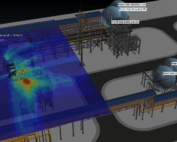
Mixing Geographic and Risk-Based Gas Mapping – Does it Work?
The “Concept of Proportionality”, as defined in the new British Standard on Fire and Gas Mapping, states that, when undertaking a F&G mapping study, the […]
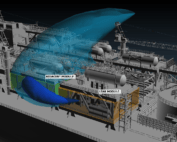
Correlating Gas Detection and Leak Location
A common assumption implicit in gas detection systems is that a gas cloud is detected in roughly the same location of the leak source. Indeed, […]
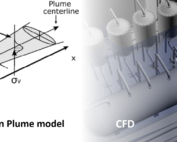
Can Gaussian Plume Models be used for Risk-Based Gas Mapping?
One of my favorite books is “I do like CFD” by Katate Masatuka. Alongside the technical discussion of various CFD methods, he writes why he […]
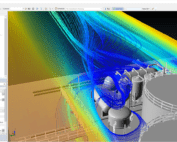
Why we wrote in:Flux
The first time we exhibited in:Flux was at the Hazards 26 conference in Edinburgh, 2016. Our exhibit booth included a monitor showing the alpha version…barely […]
Feature Videos

Fire Modeling Overview Video
We are pleased to announce that Fire Modeling capability is now included with in:Flux.
Set up […]
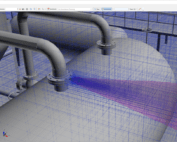
Developing the Adaptive Meshing Capability for in:Flux CFD
It’s not an exaggeration to say that in:Flux was conceived around one idea: automatic, adaptive meshing. […]
Software Release Highlights
in:Flux v5.2 Release Highlights
Feature Improvements
Reworked the behavior of the Start and Resume buttons for local simulations. If the scheduler is idle, or the […]
in:Flux v5.1 Release Highlights
Feature Improvements
Added a “Set Selected to Simulation” option to the right-click menu when multiple visual items are selected, with the […]
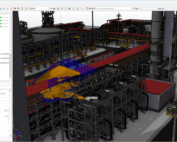
in:Flux v5.0 Release Highlights
Summary
This is a major update to in:Flux, affecting many aspects of the user interface, functionality and security:
The main 3D window […]
Detect3D v3.3 Release Highlights
Summary
This update focuses on various performance improvements to the previous Detect3D versions.
Feature Improvements
Changes to the project now produce more […]
Fire Modeling Development

Why We Wrote a Fire Model for in:Flux
One thing stood out to me while we were writing a fire model for in:Flux. CFD […]
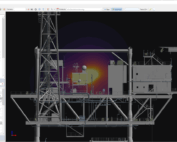
Fire Model Part 2: Choosing the Right Level of Detail
Let me make a bold statement about CFD:
Simple models perform above expectations; the opposite is true […]
Fire Model Part 1: Designing a CFD Code
I started writing my first CFD code in 2007. Back then, it seemed obvious to me […]
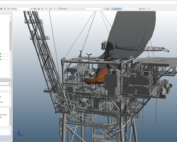
Developing a Fire Model for in:Flux CFD
The most common request we get from our users is to add a fire modeling capability […]
Find us